
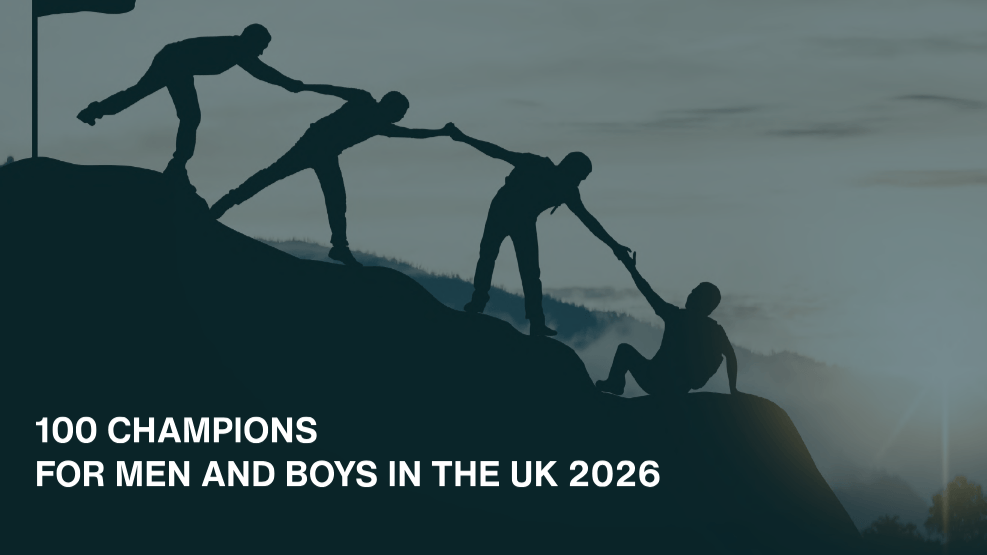
I’m delighted to have made it on to the list of 100 Champions for Men and Boys identified by the Centre for Policy Research on Men and Boys (CPRMB).
When I left my position as Clinical Director of the Fens Unit in HMP Whitemoor, I didn’t really expect myself to still be having so many conversations in which I’m advocating for male vulnerability and trauma to be acknowledged.
But the reality is:
- Mental health professionals and policy makers still often expect male distress to be manifest in the same way as female distress
- Discussions of perpetrating crime and being victimised by it are still excessively stereotyped and gendered
- Past histories of trauma continue to be under-recognised and the impact unappreciated when we’re discussing male mental health
- Male victims of both sexual abuse and domestic violence continue to go unnoticed and risk being depicted as the perpetrators if they seek help
There is definitely a shift in the right direction. For instance, it’s much more common these days to see authors of posts pulled up for the assumption that all perpetrators are male and all victims are female. There are many people prioritising interventions tailored to address male vulnerability. But there’s still a lot of work to do.
This is why I’m working with a collective of men – Andy Woodward, Dan, Joe Sabien, Rafael Viola and Tobi Tarquin to organise a conference for male survivors this year under the banner of What Was Hidden. This span out of Inside the Boys Club (a photo exhibition created by the award winning artistic duo Sane Seven and Marius Jankiauscas).
I will be posting more about What Was Hidden in the next few weeks.
With many of my podcast, Locked Up Living’s, former guests also featured in the CPRMB 100 Champions – Elizabeth Bates, Duncan Craig, Ally Fogg, Ben Hine, Sophie King-Hill, I’m in good company.